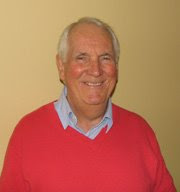
Leo O'Neil's Barber Shop in Arthur
There were three barber shops in Arthur when I was growing up.
They were all equally adept at the old 'short-back-and-sides' haircut that was the fashion in Arthur at the time. Dad, my brothers and I patronized each shop, going from one to the other, but when I became a teenager I gravitated toward Leo O'Neil's shop.
I am not sure why I settled on Leo's but looking back it was probably because his shop had more character. The other two were neat, clean, well lit and business-like.
Leo's place was different.
On entering the shop, one noticed that the front window was full of pots of huge rubber plants as well as of some kind of ivy that grew and grew. Leo carefully trained the ivy shoots up the wall, over a mirror, around pictures, and on around the room. It was hard to believe that water and nourishment could flow all the way from the pots in the window to the ends of the vines.
Leo and his large old-fashioned barber's chair were on the left, with a sink and counter against the wall and a large mirror above.
On the back wall of the shop were shelves with cubby holes that in the old days held the shaving cups used by each of the customers. By my time, few people got shaves and the cups were full of pencils, pens, screws, nails and bits of hardware.
On the right of the store was a round coal stove, a Quebec Heater, with an upper and lower door, the upper one for putting in the coal and the lower one for taking out the ashes.
Behind the stove and against the wall were old mismatched dining room chairs on which old-timers sat---retired farmers---who got out of the house each day to meet and sort out the weather, the state of the crops, the success of the local hockey team and occasionally local scandals and accidents.
Some of the men would be chewing tobacco and when the time came to spit, they would come around to the front of the stove, open the top door and expectorate. The hiss was something to hear.
As I say, Leo's place had character.
Leo was, I guess, in his early 60s and he could remember back to the turn of the century. I liked to get him talking about the old days.
Here is one of his stories.
He said that in 1900 Arthur, which was well shy of a thousand inhabitants, had three distilleries and five breweries.
When he was a lad, his father would send him to one of the breweries for a honey pail of beer.
I should explain that in those pre-plastic days, containers were scarce and relatively expensive, so people re-used them whenever they could.
Honey pails---five or ten pound size---with a wire handle were much prized, (They are much prized still, but now in antique shops, where they sell for up to a hundred dollars or sometimes more depending on the condition.)
Once when he came back with the pail of beer, his dad became angry because the pail was only three-quarters full. It wasn't Leo's fault, the brewery person had filled the top quarter with foam, which had disappeared by the time Leo got home.
The next time, Leo's dad put his finger in some butter and ran his finger around the inside top rim of the pail.
As soon as the foam touched the butter, it collapsed and the brewery was forced to give Leo a full pail of beer to take home to his dad.
Leo chuckled when he told that story.
ooo
During the winter of 1946-47, Arthur was cut off from the outside world for over a week because of a series of fierce snow storms. There were no snow blowers at that time and there was simply no room for the normal snow plows to push the snow. The roads that linked Arthur to the rest of the province were blocked.
Finally, a couple of horse drawn sleighs loaded with emergency supplies managed to get through by travelling over fields.
What emergency supplies did they bring in to the cut-off and suffering residents of Arthur?
Flour for the bakeries, so they could bake bread.
And beer for the hotels!
ooo
Talking of beer reminds me of my own days brewing beer. I started while we were living in England in the early 1960s and my early efforts (and failures) will be the subject of another posting.
When we returned to Canada in 1966, I discovered that to brew beer legally in Ontario I had to have a license. I prepared the required forms listing all the equipment I would be using and was told that I could start brewing but only in the location in which I was living at the time. I had to post the license in the room where I was going to brew---the basement of our house.
I would brew the beer in new, large white plastic garbage containers and then age it in 5 gallon glass carboys. After the beer had aged, I would siphon it using a rubber tube (listed in my license) into beer bottles.
When our two boys were about 6 and 4, they liked to watch the siphoning process. I think they were fascinated by the flow of beer up the tube and then down into the bottles. And they enjoyed watching as I pinched the tube to stop the flow as one bottle was filled and then transferred the tube to another bottle, all without stopping the siphoning process.
They badgered me to give them a chance to suck on the siphon tube. Assuming the statute of limitations has expired on endangerment of young lives, it is OK to admit that I agreed to let them have a try. I explained that you had to give one really big pull on the tube and then quickly insert the tube in a beer bottle.
Again and again I warned them that if they got a mouthful they had to spit it out immediately.
They proved to be very good students, and as far as I can recall they never got a mouthful.(Pat seems to recall that they did---we'll have to ask them to settle the issue.)
ooooooooooooooooooooooooooooooooooooooooooooooooooooooooooooooooooo
See you next Sunday for Posting #58 with more stories from our family’s universe! If you have comments or suggestions, please leave a comment at the bottom of this posting, or email me at johnpathunter@cs.com.
Saturday, January 30, 2010

Sunday, January 24, 2010
POSTING #56
International Affairs Conference at West Point, 1959
President Obama's visit to West Point last fall to deliver a speech on Afghanistan reminded me of a conference I attended there in 1959.
Queen's had been invited to send two representatives to a conference on international relations to be held at West Point in March, 1959. The Politics Department selected me and the History Department chose, Dave Sinclair, a friend of mine.
We travelled by train to New York, then to West Point and stayed at the Hotel Thayer, on the campus of the military academy.
I have four major memories of that trip.
First, much of the conference took place deep underground. We were told that the Academy, faced with the need for increased classrooms and offices, had decided to preserve its low skyline. Instead of building multi-story towers they had decided to go down.
I think they had at least ten floors underground with corridors, offices, and classrooms. It was odd to get in an elevator, press a floor number and then feel the car going down.
(I was going to check on Google for more information on the exact number of underground floors but decided that, given the current international environment, that it might not be wise to be seen to be asking questions about structures at West Point.)
Although the nominal reason for going into the ground was concern for the skyline, I wonder whether there was another reason. In the 1950s, the US and Canadian governments were encouraging people to build fall out shelters in their basements or backyards because of the danger of a nuclear attack from the Soviet Union.
ooo
The second memory is of how disciplined and hardworking the West Point students were. We were told that they had a test every week in every course they were taking. If they failed a single test, they could be asked to leave.
It was hard for my friend and me to get our heads around such a regime. We would routinely let one or two courses slide while we completed an essay or got involved in extra-curricular activities, and then do 'all-nighters' to catch up on the ignored courses before the exams.
ooo
The third memory was of a speech given by a senior official from the US State Department. It was a wonderfully comprehensive and clear exposition of the situation in the Middle East. He described the different parties, factions, cliques, tribes and families and their shifting alliances. I had spent 6 weeks the previous summer at the Institute of World Affairs Foreign Student Seminar at Twin Lakes, Connecticut and thought I had a pretty good understanding of Middle Eastern politics but he made everything a great deal clearer.
After going through this description of the situation in the Middle East he concluded by telling us the advice the State Department routinely gave to Ambassadors leaving for the region:
"Stay in with the ins,
Stay in with the outs,
And don't stand between a dog and a lamp post."
Good advice, for many situations in life!
ooo
The final memory is of a speech by an academic and sometime government official.
He started off by saying that it was easy to be terrified by the challenges facing the world in 1959. The Soviets had the hydrogen bomb and had intercontinental ballistic missiles pointed at North America. The Soviet Union was also winning the international space race, having launched the first satellite, Sputnik, in 1957. The Communists had taken over China in 1949 and were consolidating their position. Fidel Castro had overthrown the government of Cuba in January 1959. The US marines had had to intervene in Lebanon in 1958. And on and on.
The speaker then said that it was necessary to keep an historical perspective.
He then took us back in time, century by century.
In 1859, John Brown and a group of 21 abolitionists had attacked Fort Sumter, making the Civil War all but inevitable.
In 1759, Britain and France were engaged in war in North America.
In 1659, Britain was engaged in a fierce civil war.
Back and back he went to the birth of Christ, listing the wars, plagues, fires and other disasters people had to face.
His message was that every age has its problems.
A simple message but one worth remembering, perhaps, as we cope with two wars, a severe recession, global warming, HiNi and on and on.
ooooooooooooooooooooooooooooooooooooooooooooooooooooooooooooooooooo
See you next Sunday for Posting #57 with more stories from our family’s universe! If you have comments or suggestions, please leave a comment at the bottom of this posting, or email me at johnpathunter@cs.com.
President Obama's visit to West Point last fall to deliver a speech on Afghanistan reminded me of a conference I attended there in 1959.
Queen's had been invited to send two representatives to a conference on international relations to be held at West Point in March, 1959. The Politics Department selected me and the History Department chose, Dave Sinclair, a friend of mine.
We travelled by train to New York, then to West Point and stayed at the Hotel Thayer, on the campus of the military academy.
I have four major memories of that trip.
First, much of the conference took place deep underground. We were told that the Academy, faced with the need for increased classrooms and offices, had decided to preserve its low skyline. Instead of building multi-story towers they had decided to go down.
I think they had at least ten floors underground with corridors, offices, and classrooms. It was odd to get in an elevator, press a floor number and then feel the car going down.
(I was going to check on Google for more information on the exact number of underground floors but decided that, given the current international environment, that it might not be wise to be seen to be asking questions about structures at West Point.)
Although the nominal reason for going into the ground was concern for the skyline, I wonder whether there was another reason. In the 1950s, the US and Canadian governments were encouraging people to build fall out shelters in their basements or backyards because of the danger of a nuclear attack from the Soviet Union.
ooo
The second memory is of how disciplined and hardworking the West Point students were. We were told that they had a test every week in every course they were taking. If they failed a single test, they could be asked to leave.
It was hard for my friend and me to get our heads around such a regime. We would routinely let one or two courses slide while we completed an essay or got involved in extra-curricular activities, and then do 'all-nighters' to catch up on the ignored courses before the exams.
ooo
The third memory was of a speech given by a senior official from the US State Department. It was a wonderfully comprehensive and clear exposition of the situation in the Middle East. He described the different parties, factions, cliques, tribes and families and their shifting alliances. I had spent 6 weeks the previous summer at the Institute of World Affairs Foreign Student Seminar at Twin Lakes, Connecticut and thought I had a pretty good understanding of Middle Eastern politics but he made everything a great deal clearer.
After going through this description of the situation in the Middle East he concluded by telling us the advice the State Department routinely gave to Ambassadors leaving for the region:
"Stay in with the ins,
Stay in with the outs,
And don't stand between a dog and a lamp post."
Good advice, for many situations in life!
ooo
The final memory is of a speech by an academic and sometime government official.
He started off by saying that it was easy to be terrified by the challenges facing the world in 1959. The Soviets had the hydrogen bomb and had intercontinental ballistic missiles pointed at North America. The Soviet Union was also winning the international space race, having launched the first satellite, Sputnik, in 1957. The Communists had taken over China in 1949 and were consolidating their position. Fidel Castro had overthrown the government of Cuba in January 1959. The US marines had had to intervene in Lebanon in 1958. And on and on.
The speaker then said that it was necessary to keep an historical perspective.
He then took us back in time, century by century.
In 1859, John Brown and a group of 21 abolitionists had attacked Fort Sumter, making the Civil War all but inevitable.
In 1759, Britain and France were engaged in war in North America.
In 1659, Britain was engaged in a fierce civil war.
Back and back he went to the birth of Christ, listing the wars, plagues, fires and other disasters people had to face.
His message was that every age has its problems.
A simple message but one worth remembering, perhaps, as we cope with two wars, a severe recession, global warming, HiNi and on and on.
ooooooooooooooooooooooooooooooooooooooooooooooooooooooooooooooooooo
See you next Sunday for Posting #57 with more stories from our family’s universe! If you have comments or suggestions, please leave a comment at the bottom of this posting, or email me at johnpathunter@cs.com.
Sunday, January 17, 2010
POSTING #55
Stories from Ottawa's Suburbs
The first house we bought (in 1967) was in the east end of Ottawa in a new development, surrounded by hills, fields and bush. Until the spaces got covered with houses and streets it was a fine place to raise children. They were able to roam over a huge area---they were 'free-range' kids.
We lived there for a decade. The suburbs are sometimes depicted as dull places with people from the same backgrounds, values and economic class. That isn't how I remember that area.
There were some fascinating people.
One was a scientist who loved to tinker with anything electrical or electronic. He had bought a new car and I wandered over when I saw him working under the hood.
"What are you doing?", I asked.
It turned out he was doing two things. First, he was disconnecting all the emission control items on the car. According to research he had done, they reduced the power of the car as well as its fuel efficiency, while the impact on the environment was marginal.
Second, he was rewiring the ignition so that the car would not start unless the cigarette lighter was in place.
He could leave the keys in the car's ignition and carry the cigarette lighter in his pocket.
No one could 'hot wire' his new car.
I guess it worked, no one ever stole his car.
ooo
There was another neighbour who believed that the oil companies were behind the instructions that one should change the oil regularly. According to him the oil companies just wanted to sell more engine oil.
He never changed his oil. When the oil level got down he would add a quart.
He was also convinced that regular servicing of the car was unnecessary. He took the car into the garage whenever something went wrong.
I, on the other hand, followed all the instructions about oil changes and regular servicing and I'm really not sure that our cars lasted any longer or better than his.
ooo
A friend bought a house in the early 1960s in another suburb of Ottawa, in the south. In 1963 a newly elected Member of Parliament from Quebec moved into the neighbourhood. His English was poor but he was outgoing and soon most of the neighbours had met him. In the evenings he liked to play catch with his two young children, a game that was soon joined by other kids from the neighbourhood.
My friend was part of an informal car pool and someone suggested that they invite the newcomer, whom they had seen waiting at a bus stop, to join them.
He was a congenial member of the car pool, telling them stories in his mangled English about his experiences in the House of Commons. He once thanked them for helping him practice his English.
The car pool worked for several years and then the MP told the others that he wouldn't be riding with them anymore.
"The boss", he said, "wants me to have a car."
That was Jean Chretien's way of telling them that Prime Minister Trudeau had appointed him to the cabinet.
ooooooooooooooooooooooooooooooooooooooooooooooooooooooooooooooooooo
See you next Sunday for Posting #56 with more stories from our family’s universe! If you have comments or suggestions, please leave a comment at the bottom of this posting, or email me at johnpathunter@cs.com.
The first house we bought (in 1967) was in the east end of Ottawa in a new development, surrounded by hills, fields and bush. Until the spaces got covered with houses and streets it was a fine place to raise children. They were able to roam over a huge area---they were 'free-range' kids.
We lived there for a decade. The suburbs are sometimes depicted as dull places with people from the same backgrounds, values and economic class. That isn't how I remember that area.
There were some fascinating people.
One was a scientist who loved to tinker with anything electrical or electronic. He had bought a new car and I wandered over when I saw him working under the hood.
"What are you doing?", I asked.
It turned out he was doing two things. First, he was disconnecting all the emission control items on the car. According to research he had done, they reduced the power of the car as well as its fuel efficiency, while the impact on the environment was marginal.
Second, he was rewiring the ignition so that the car would not start unless the cigarette lighter was in place.
He could leave the keys in the car's ignition and carry the cigarette lighter in his pocket.
No one could 'hot wire' his new car.
I guess it worked, no one ever stole his car.
ooo
There was another neighbour who believed that the oil companies were behind the instructions that one should change the oil regularly. According to him the oil companies just wanted to sell more engine oil.
He never changed his oil. When the oil level got down he would add a quart.
He was also convinced that regular servicing of the car was unnecessary. He took the car into the garage whenever something went wrong.
I, on the other hand, followed all the instructions about oil changes and regular servicing and I'm really not sure that our cars lasted any longer or better than his.
ooo
A friend bought a house in the early 1960s in another suburb of Ottawa, in the south. In 1963 a newly elected Member of Parliament from Quebec moved into the neighbourhood. His English was poor but he was outgoing and soon most of the neighbours had met him. In the evenings he liked to play catch with his two young children, a game that was soon joined by other kids from the neighbourhood.
My friend was part of an informal car pool and someone suggested that they invite the newcomer, whom they had seen waiting at a bus stop, to join them.
He was a congenial member of the car pool, telling them stories in his mangled English about his experiences in the House of Commons. He once thanked them for helping him practice his English.
The car pool worked for several years and then the MP told the others that he wouldn't be riding with them anymore.
"The boss", he said, "wants me to have a car."
That was Jean Chretien's way of telling them that Prime Minister Trudeau had appointed him to the cabinet.
ooooooooooooooooooooooooooooooooooooooooooooooooooooooooooooooooooo
See you next Sunday for Posting #56 with more stories from our family’s universe! If you have comments or suggestions, please leave a comment at the bottom of this posting, or email me at johnpathunter@cs.com.
Sunday, January 10, 2010
POSTING #54
A Crotchety Repairer of Small Appliances
My old computer died and the new one's operating system, Vista (don't get me started!), refuses to recognize my somewhat elderly but otherwise perfectly functional scanner and printer. The computer shop says I have no choice but to buy a new printer and scanner. I have bought a new printer but am still dragging my feet on the scanner.
All of this reminded me of the owner of a store in Ottawa who repaired small kitchen appliances. He was in his late 50's, tall and erect with close-cropped grey hair, and half glasses. He always wore a neat shirt and tie.
And he was French, from France, with the attitude that one associates with Parisian waiters, the attitude that says that: the customer is not only always wrong, but dumb to boot.
But the thing was that he did excellent work, was fast and had a mania about keeping appliances working.
And he didn't charge the earth.
On one occasion, I took in a coffee grinder that had stopped grinding. I told the owner that it wasn't working, that the gears or grindstones or whatever ground the coffee weren't working.
He adjusted his head so he could see me over his half glasses and said, "May I infer from the fact that you don't know whether this machine has gears or grindstones that you haven't taken it apart to clean it?"
Ouch!!
He took the grinder from me as though I had no business owning such a fine machine.
The machine was repaired in a day, at a very modest cost, and worked like new.
On another occasion I took in the plastic container from a food processor. The base of the container had a crack and, assuming that the plastic could not be repaired, I asked him if he stocked a replacement part.
He studied the break for a few moments and then straightened up.
"I do have a replacement but the company is charging a ridiculous amount for something that is just plastic. They want $75.
"You look like a civil servant", he added, "You must have a paper clip in your pocket."
Puzzled, I looked in my suit coat pockets, and, what-do-you-know, found two paper clips.
"This one will do", he said, taking the smaller of the two.
He plugged in a small electric soldering iron and while it was heating he straightened out the paper clip and then with some pliers bent it into a neat, tight oval.
He pressed the two broken edges of the food processor container together, placed the paper clip oval on top of the break and then pressed the soldering iron onto the clip.
The clip melted into the plastic, welding the two parts together.
He let the plastic cool and then handed the container back to me, "There, it is better than new".
I asked how much I owed him.
"Oh, give me two dollars."
The repaired container lasted for years, until we decided that we needed a more powerful food processor.
On yet another occasion, he informed me that the appliance could not be repaired for a week.
Take it or leave it.
I guess he felt he had been a bit abrupt.
He added that he was going to Philadelphia to see an exhibition of Paul Cézanne's paintings.
I had taken an art history course at Queen's from Andre Bieler an artist/professor who loved Cézanne, a love that he communicated to his students.
I told the store owner that I admired how Cézanne used colour to represent the different planes of roof tops in Provence.
He looked at me, not with respect---he was French from France after all---but with a new interest. He explained that he was from Provence and that the paintings meant a great deal to him.
We had a pleasant chat about Cézanne,
It would be nice to say that our relationship changed after that shared Cézanne moment, but it wouldn't be true.
He remained as superior and acerbic as ever.
ooooooooooooooooooooooooooooooooooooooooooooooooooooooooooooooooooo
See you next Sunday for Posting #55 with more stories from our family’s universe! If you have comments or suggestions, please leave a comment at the bottom of this posting, or email me at johnpathunter@cs.com.
My old computer died and the new one's operating system, Vista (don't get me started!), refuses to recognize my somewhat elderly but otherwise perfectly functional scanner and printer. The computer shop says I have no choice but to buy a new printer and scanner. I have bought a new printer but am still dragging my feet on the scanner.
All of this reminded me of the owner of a store in Ottawa who repaired small kitchen appliances. He was in his late 50's, tall and erect with close-cropped grey hair, and half glasses. He always wore a neat shirt and tie.
And he was French, from France, with the attitude that one associates with Parisian waiters, the attitude that says that: the customer is not only always wrong, but dumb to boot.
But the thing was that he did excellent work, was fast and had a mania about keeping appliances working.
And he didn't charge the earth.
On one occasion, I took in a coffee grinder that had stopped grinding. I told the owner that it wasn't working, that the gears or grindstones or whatever ground the coffee weren't working.
He adjusted his head so he could see me over his half glasses and said, "May I infer from the fact that you don't know whether this machine has gears or grindstones that you haven't taken it apart to clean it?"
Ouch!!
He took the grinder from me as though I had no business owning such a fine machine.
The machine was repaired in a day, at a very modest cost, and worked like new.
On another occasion I took in the plastic container from a food processor. The base of the container had a crack and, assuming that the plastic could not be repaired, I asked him if he stocked a replacement part.
He studied the break for a few moments and then straightened up.
"I do have a replacement but the company is charging a ridiculous amount for something that is just plastic. They want $75.
"You look like a civil servant", he added, "You must have a paper clip in your pocket."
Puzzled, I looked in my suit coat pockets, and, what-do-you-know, found two paper clips.
"This one will do", he said, taking the smaller of the two.
He plugged in a small electric soldering iron and while it was heating he straightened out the paper clip and then with some pliers bent it into a neat, tight oval.
He pressed the two broken edges of the food processor container together, placed the paper clip oval on top of the break and then pressed the soldering iron onto the clip.
The clip melted into the plastic, welding the two parts together.
He let the plastic cool and then handed the container back to me, "There, it is better than new".
I asked how much I owed him.
"Oh, give me two dollars."
The repaired container lasted for years, until we decided that we needed a more powerful food processor.
On yet another occasion, he informed me that the appliance could not be repaired for a week.
Take it or leave it.
I guess he felt he had been a bit abrupt.
He added that he was going to Philadelphia to see an exhibition of Paul Cézanne's paintings.
I had taken an art history course at Queen's from Andre Bieler an artist/professor who loved Cézanne, a love that he communicated to his students.
I told the store owner that I admired how Cézanne used colour to represent the different planes of roof tops in Provence.
He looked at me, not with respect---he was French from France after all---but with a new interest. He explained that he was from Provence and that the paintings meant a great deal to him.
We had a pleasant chat about Cézanne,
It would be nice to say that our relationship changed after that shared Cézanne moment, but it wouldn't be true.
He remained as superior and acerbic as ever.
ooooooooooooooooooooooooooooooooooooooooooooooooooooooooooooooooooo
See you next Sunday for Posting #55 with more stories from our family’s universe! If you have comments or suggestions, please leave a comment at the bottom of this posting, or email me at johnpathunter@cs.com.
Sunday, January 3, 2010
POSTING #53
Some Korean Stories: Korean Cuisine, Grieving, Serenity in Seoul
Korean Cuisine
In 2000, I studied the Korean Employment Service on a contract with the World Bank. I went alone for two weeks in January, toured offices, talked to officials and then came home and prepared my report.
A few months later, Pat accompanied me as I went back to Korea to present my findings, conclusions and recommendations to a conference in Seoul.
My main guide during the first visit was a young computer systems fellow who had done graduate work in the US.
He was developing systems for the Korean Employment Service and understood its intricacies extremely well.
Unlike most Koreans, he was heavy-set, even plump, with a good sense of humour.
We got along well.
He said he had been told to take me anywhere I wanted to go, but to make sure that I had a good chance to sample Korean food, to take me to a variety of local restaurants.
We sampled all kinds of the tasty, nutritious and heart-healthy dishes---served almost always with Kimchi, a Korean side dish that is a cousin of sauerkraut. Various vegetables are fermented in crocks, formerly by being buried in the ground and today by being stored in special refrigerators. Click here for an article on Kimchi.
On the final day of my visit, the guide asked, rather hesitantly, if he could request a favour.
Sure, I said, wondering whether he wanted information on immigrating to Canada---a fairly common question during consulting assignments.
"Today, do you think we could have lunch at Burger King?"
I guess I looked at him with surprise, "Do you like Burger King?"
"You don't think I got this fat,", he replied, patting his substantial tummy, "by eating Korean food?"
We both had burgers, fries and thick, rich chocolate shakes.
Except, he had two burgers.
Grieving
On my second visit to Korea, a different Employment Service Official was designated to 'look after' Pat and me.
The thin, serious-looking fellow in his 30s with a PhD in Labour Market Economics from an American university took us on tours of Seoul.
Pleasant conversations with him became more serious, as chats do when one finds an empathetic person.
At one point he told us that he was having trouble getting over the death from cancer of his younger brother with whom he had been very close. He said that his parents had gone back to childhood religions to try to find solace---his mother had been raised as a Buddhist while his father had been raised as a Catholic. He said he thought that the religions might be helping his mother and father to cope with the death.
He had not embraced either religion when he was growing up but after trying unsuccessfully to cope on his own with the death of his brother he had decided to try Buddhism. When that didn't seem to help, he had turned to Catholicism.
He had now abandoned Catholicism and was once again trying to deal with the death on his own.
He said that he had been hoping for 'a big bang' (his term) from one of the religions, some powerful revelation that would have given him comfort.
Now, he felt, he would have to find his own way to cope with the loss of his brother.
But it wasn't easy.
Serenity in Seoul
After dinner one evening at our hotel, the Intercontinental Hotel in downtown Seoul, Pat and I decided to go for a stroll.
The streets were crowded with cars and the air was full of the blaring of horns and the squealing of tires.
We saw a Buddhist temple set on a small hill in the midst of a large, park-like space. We walked onto the grounds and both noticed that the sounds of the city seemed to diminish, almost miraculously.
As we wandered on we enjoyed the sight of the ornate temple decorated with chains of colourful paper lanterns.
By this time, there was no sound at all from the city, just the gentle sound of wind chimes hanging from the corners of the temple.
It wasn't a 'big bang'---not even a 'small bang' I suppose---but it was a few minutes of peace and serenity in the midst of a noisy city, minutes that we will never forget.
ooooooooooooooooooooooooooooooooooooooooooooooooooooooooooooooooooo
See you next Sunday for Posting #54 with more stories from our family’s universe! If you have comments or suggestions, please leave a comment at the bottom of this posting, or email me at johnpathunter@cs.com.
Korean Cuisine
In 2000, I studied the Korean Employment Service on a contract with the World Bank. I went alone for two weeks in January, toured offices, talked to officials and then came home and prepared my report.
A few months later, Pat accompanied me as I went back to Korea to present my findings, conclusions and recommendations to a conference in Seoul.
My main guide during the first visit was a young computer systems fellow who had done graduate work in the US.
He was developing systems for the Korean Employment Service and understood its intricacies extremely well.
Unlike most Koreans, he was heavy-set, even plump, with a good sense of humour.
We got along well.
He said he had been told to take me anywhere I wanted to go, but to make sure that I had a good chance to sample Korean food, to take me to a variety of local restaurants.
We sampled all kinds of the tasty, nutritious and heart-healthy dishes---served almost always with Kimchi, a Korean side dish that is a cousin of sauerkraut. Various vegetables are fermented in crocks, formerly by being buried in the ground and today by being stored in special refrigerators. Click here for an article on Kimchi.
On the final day of my visit, the guide asked, rather hesitantly, if he could request a favour.
Sure, I said, wondering whether he wanted information on immigrating to Canada---a fairly common question during consulting assignments.
"Today, do you think we could have lunch at Burger King?"
I guess I looked at him with surprise, "Do you like Burger King?"
"You don't think I got this fat,", he replied, patting his substantial tummy, "by eating Korean food?"
We both had burgers, fries and thick, rich chocolate shakes.
Except, he had two burgers.
Grieving
On my second visit to Korea, a different Employment Service Official was designated to 'look after' Pat and me.
The thin, serious-looking fellow in his 30s with a PhD in Labour Market Economics from an American university took us on tours of Seoul.
Pleasant conversations with him became more serious, as chats do when one finds an empathetic person.
At one point he told us that he was having trouble getting over the death from cancer of his younger brother with whom he had been very close. He said that his parents had gone back to childhood religions to try to find solace---his mother had been raised as a Buddhist while his father had been raised as a Catholic. He said he thought that the religions might be helping his mother and father to cope with the death.
He had not embraced either religion when he was growing up but after trying unsuccessfully to cope on his own with the death of his brother he had decided to try Buddhism. When that didn't seem to help, he had turned to Catholicism.
He had now abandoned Catholicism and was once again trying to deal with the death on his own.
He said that he had been hoping for 'a big bang' (his term) from one of the religions, some powerful revelation that would have given him comfort.
Now, he felt, he would have to find his own way to cope with the loss of his brother.
But it wasn't easy.
Serenity in Seoul
After dinner one evening at our hotel, the Intercontinental Hotel in downtown Seoul, Pat and I decided to go for a stroll.
The streets were crowded with cars and the air was full of the blaring of horns and the squealing of tires.
We saw a Buddhist temple set on a small hill in the midst of a large, park-like space. We walked onto the grounds and both noticed that the sounds of the city seemed to diminish, almost miraculously.
As we wandered on we enjoyed the sight of the ornate temple decorated with chains of colourful paper lanterns.
By this time, there was no sound at all from the city, just the gentle sound of wind chimes hanging from the corners of the temple.
It wasn't a 'big bang'---not even a 'small bang' I suppose---but it was a few minutes of peace and serenity in the midst of a noisy city, minutes that we will never forget.
ooooooooooooooooooooooooooooooooooooooooooooooooooooooooooooooooooo
See you next Sunday for Posting #54 with more stories from our family’s universe! If you have comments or suggestions, please leave a comment at the bottom of this posting, or email me at johnpathunter@cs.com.
Sunday, December 27, 2009
POSTING #52
Saunas in Dog River Ontario, and Siberia
During a swim this week at the Brock University's pool I noticed that the men's sauna was back in operation. It is one of those saunas in which a few rocks are heated by electrical elements. Despite large signs warning us not to, someone periodically throws water on the rocks thus destroying the elements.
I was reminded of some saunas I have known, saunas of the real kind with piles of rocks heated by wood fires
A Sauna in Dog River Ontario
I heard this story while I was working in the summer of 1956 as a labourer-teacher for Frontier College at Dog River, a bush camp west of what is now Thunder Bay.
There were no indoor bathroom facilities at Dog River. Men used a 5 hole privy out back (I don't know anything about the privy for the 6 or so female cooks and cookees---cookees were the women who helped the cooks and served the food in the kitchen).
We went to a wash house to shave and wash our faces. We would fill an enamel basin with hot water dipped from a huge cauldron and after we had finished we would rinse out the basin, wipe it dry with our towel and hand it to the next person.
All-over-washes (you couldn't call them 'baths') took place in the sauna, a good-sized wooden building on the shore of the Dog River. As one entered the sauna there was a 'cooling room' and then beyond that the hot room, the heart of the sauna.
The practice was to hang ones clothes in the cooling room, go into the hot room and sit on one of the tiered benches, going higher until one found a heat level that was just right. If even the top bench wasn't hot enough, one threw a scoop or two of water on the stones.
After a spell in the hot room, the hardy ones ran through the cooling room, onto a short deck and then jumped into the river.
The rest of us went into the cooling room, got a bucket of warm water and soaped, shampooed, scrubbed and rinsed off with the water draining between the boards onto the ground below.
(While I was at the camp, the younger workers started a campaign for in-door plumbing---I will write about that in another blog.)
Sorry for all this description but I needed to provide some background for the story that---finally---I can tell.
The previous summer, one of the accountants from head office spent a few weeks at the camp reviewing the books. When his 12 and 10 year old sons got out of school he decided to bring them to the camp, to give his wife a break.
There was nothing organized for the boys to do, so they just wandered around the camp looking for adventure and more often than not finding mischief.
The men working in the camp, pulling logs from the river and loading them onto trucks, were bothered by the boys tricks and worried that they were going to get hurt.
Complaints to the accountant didn't do any good.
Finally, a couple of the men decided to teach the boys a lesson.
They asked the boys if they would like to have a sauna. This was something new and the boys quickly agreed. They put on their swim suits, and entered the sauna.
The men explained that really tough people used the top tier bench but if that was too hot they could cool things down by throwing cold water on the stones.
The boys nodded impatiently and said they would be OK.
The men shut the door to the hot room and quietly moved a bench against it so the kids were blocked in. Then they sat down quietly to wait.
One of the kids said that it was too hot and threw some water on the steaming stones, which, of course, just produced more searing heat.
The fellows in the cooling room heard the kids muttering and moving down to the middle and then to the bottom tier. Then the splash of yet more water.
Finally, the kids tried to get out of the hot room but found they couldn't open the door.
The fellows gave them a few minutes and then opened the door.
The boys were lying on the floor, trying to suck cool air from the cracks between the boards.
Later that day, the boys told their father that they were bored with the camp and wanted to go home. After dinner, the dad drove them home.
Tough love?
I guess so, but they were safe at home, not running behind trucks and heavy equipment.
A Sauna in Siberia
My interpreter, Yuri, and I were on a state-owned farm in deepest Siberia in 1996 as I continued my travels from Moscow checking Russian employment offices to see whether they could be converted into model offices by Canadian consultants.
I had checked out a proposed model office in a nearby city and since there was no decent hotel in the city we were staying on the farm---in very comfortable rooms.
After dinner with some of the farm managers, they invited us to join them for a sauna evening.
The sauna was very similar to the one at Dog River--- a genuine wood-fired sauna---with a couple of exceptions. There was no river or lake to jump into so the farm had built a deep, indoor pool filled with cold water, just off the cooling room. The other difference was that there was a table in the cooling room covered with beer, vodka, smoked fish, cheese, and cut tomatoes and cucumbers. The Dog River camp as with all Canadian bush camps banned alcoholic beverages.
Yuri and I joined the managers in the hot room. Yuri, having had more sauna time than I, was able to go higher up on the tiers. One of the hosts brought out a pail of water with fresh poplar branches and offered to swat our backs, to get the circulation going. It felt good.
After turning lobster red, we jumped in the cold pool for a few minutes and then returned to seats in the cooling room to have some vodka toasts, and food.
Then the cycle was repeated: hot room, pool, cooling room.
During a session in the cooling room, one of our hosts told a story about a Moscow bureaucrat who had come out to inspect the farm during the Gorbachev era.
Gorbachev had decided to move against the Soviet Union's massive drinking problem with many measures to ban or at least limit the use of alcohol.
Government officials who were used to long official lunches and dinners with copious amount of vodka, wine and beer were upset but, of course, couldn't object.
I was told that the rules about drinking were tightly enforced in Moscow but the further one travelled from the Kremlin, the less they were followed. Moscow officials loved, therefore, to travel.
This particular Moscow official had a lot to drink at dinner and could hardly make his way to the sauna for an evening of further comradeship. His hosts were almost as drunk as he was---they had had to appear to keep pace with him, glass for glass.
After ten or fifteen minutes on the top tier of the hot room, the Moscow official stammered that he was going to jump in the pool. People helped him get down from his perch and he stumbled into the cooling room on his way to the pool.
The farm managers chuckled about how drunk he was. One of them said that the cold water would sober him up.
Then, someone said, "Oh, my god, the maintenance people drained the pool today!"
Sudden horror.
If something had happened to him, how would they explain that to Moscow---that they weren't following the official policy of alcohol-free meals. Although their heads were fuddled with drink, terror was sobering them up.
They stumbled into the cooling room, opened the door to the pool, and expected the worst.
The Moscow official was spread out on the bottom of the empty pool. Someone clambered down a ladder and went over to the body.
After a moment, he said, "He's snoring."
The Moscow official had done a belly flop, and then fallen asleep.
Our hosts told us that they got him out of the pool and into bed.
And then on a plane back to Moscow the next day.
As he got on the plane, the fiercely hung-over official thanked them for a very pleasant evening.
New Year Wishes
Pat and I would like to wish everyone a wonderful, story-full 2010!
ooooooooooooooooooooooooooooooooooooooooooooooooooooooooooooooooooo
See you next Sunday for Posting #53 with more stories from our family’s universe! If you have comments or suggestions, please leave a comment at the bottom of this posting, or email me at johnpathunter@cs.com.
During a swim this week at the Brock University's pool I noticed that the men's sauna was back in operation. It is one of those saunas in which a few rocks are heated by electrical elements. Despite large signs warning us not to, someone periodically throws water on the rocks thus destroying the elements.
I was reminded of some saunas I have known, saunas of the real kind with piles of rocks heated by wood fires
A Sauna in Dog River Ontario
I heard this story while I was working in the summer of 1956 as a labourer-teacher for Frontier College at Dog River, a bush camp west of what is now Thunder Bay.
There were no indoor bathroom facilities at Dog River. Men used a 5 hole privy out back (I don't know anything about the privy for the 6 or so female cooks and cookees---cookees were the women who helped the cooks and served the food in the kitchen).
We went to a wash house to shave and wash our faces. We would fill an enamel basin with hot water dipped from a huge cauldron and after we had finished we would rinse out the basin, wipe it dry with our towel and hand it to the next person.
All-over-washes (you couldn't call them 'baths') took place in the sauna, a good-sized wooden building on the shore of the Dog River. As one entered the sauna there was a 'cooling room' and then beyond that the hot room, the heart of the sauna.
The practice was to hang ones clothes in the cooling room, go into the hot room and sit on one of the tiered benches, going higher until one found a heat level that was just right. If even the top bench wasn't hot enough, one threw a scoop or two of water on the stones.
After a spell in the hot room, the hardy ones ran through the cooling room, onto a short deck and then jumped into the river.
The rest of us went into the cooling room, got a bucket of warm water and soaped, shampooed, scrubbed and rinsed off with the water draining between the boards onto the ground below.
(While I was at the camp, the younger workers started a campaign for in-door plumbing---I will write about that in another blog.)
Sorry for all this description but I needed to provide some background for the story that---finally---I can tell.
The previous summer, one of the accountants from head office spent a few weeks at the camp reviewing the books. When his 12 and 10 year old sons got out of school he decided to bring them to the camp, to give his wife a break.
There was nothing organized for the boys to do, so they just wandered around the camp looking for adventure and more often than not finding mischief.
The men working in the camp, pulling logs from the river and loading them onto trucks, were bothered by the boys tricks and worried that they were going to get hurt.
Complaints to the accountant didn't do any good.
Finally, a couple of the men decided to teach the boys a lesson.
They asked the boys if they would like to have a sauna. This was something new and the boys quickly agreed. They put on their swim suits, and entered the sauna.
The men explained that really tough people used the top tier bench but if that was too hot they could cool things down by throwing cold water on the stones.
The boys nodded impatiently and said they would be OK.
The men shut the door to the hot room and quietly moved a bench against it so the kids were blocked in. Then they sat down quietly to wait.
One of the kids said that it was too hot and threw some water on the steaming stones, which, of course, just produced more searing heat.
The fellows in the cooling room heard the kids muttering and moving down to the middle and then to the bottom tier. Then the splash of yet more water.
Finally, the kids tried to get out of the hot room but found they couldn't open the door.
The fellows gave them a few minutes and then opened the door.
The boys were lying on the floor, trying to suck cool air from the cracks between the boards.
Later that day, the boys told their father that they were bored with the camp and wanted to go home. After dinner, the dad drove them home.
Tough love?
I guess so, but they were safe at home, not running behind trucks and heavy equipment.
A Sauna in Siberia
My interpreter, Yuri, and I were on a state-owned farm in deepest Siberia in 1996 as I continued my travels from Moscow checking Russian employment offices to see whether they could be converted into model offices by Canadian consultants.
I had checked out a proposed model office in a nearby city and since there was no decent hotel in the city we were staying on the farm---in very comfortable rooms.
After dinner with some of the farm managers, they invited us to join them for a sauna evening.
The sauna was very similar to the one at Dog River--- a genuine wood-fired sauna---with a couple of exceptions. There was no river or lake to jump into so the farm had built a deep, indoor pool filled with cold water, just off the cooling room. The other difference was that there was a table in the cooling room covered with beer, vodka, smoked fish, cheese, and cut tomatoes and cucumbers. The Dog River camp as with all Canadian bush camps banned alcoholic beverages.
Yuri and I joined the managers in the hot room. Yuri, having had more sauna time than I, was able to go higher up on the tiers. One of the hosts brought out a pail of water with fresh poplar branches and offered to swat our backs, to get the circulation going. It felt good.
After turning lobster red, we jumped in the cold pool for a few minutes and then returned to seats in the cooling room to have some vodka toasts, and food.
Then the cycle was repeated: hot room, pool, cooling room.
During a session in the cooling room, one of our hosts told a story about a Moscow bureaucrat who had come out to inspect the farm during the Gorbachev era.
Gorbachev had decided to move against the Soviet Union's massive drinking problem with many measures to ban or at least limit the use of alcohol.
Government officials who were used to long official lunches and dinners with copious amount of vodka, wine and beer were upset but, of course, couldn't object.
I was told that the rules about drinking were tightly enforced in Moscow but the further one travelled from the Kremlin, the less they were followed. Moscow officials loved, therefore, to travel.
This particular Moscow official had a lot to drink at dinner and could hardly make his way to the sauna for an evening of further comradeship. His hosts were almost as drunk as he was---they had had to appear to keep pace with him, glass for glass.
After ten or fifteen minutes on the top tier of the hot room, the Moscow official stammered that he was going to jump in the pool. People helped him get down from his perch and he stumbled into the cooling room on his way to the pool.
The farm managers chuckled about how drunk he was. One of them said that the cold water would sober him up.
Then, someone said, "Oh, my god, the maintenance people drained the pool today!"
Sudden horror.
If something had happened to him, how would they explain that to Moscow---that they weren't following the official policy of alcohol-free meals. Although their heads were fuddled with drink, terror was sobering them up.
They stumbled into the cooling room, opened the door to the pool, and expected the worst.
The Moscow official was spread out on the bottom of the empty pool. Someone clambered down a ladder and went over to the body.
After a moment, he said, "He's snoring."
The Moscow official had done a belly flop, and then fallen asleep.
Our hosts told us that they got him out of the pool and into bed.
And then on a plane back to Moscow the next day.
As he got on the plane, the fiercely hung-over official thanked them for a very pleasant evening.
New Year Wishes
Pat and I would like to wish everyone a wonderful, story-full 2010!
ooooooooooooooooooooooooooooooooooooooooooooooooooooooooooooooooooo
See you next Sunday for Posting #53 with more stories from our family’s universe! If you have comments or suggestions, please leave a comment at the bottom of this posting, or email me at johnpathunter@cs.com.
Sunday, December 20, 2009
POSTING #51
Christmas Memories from Arthur, Golders Green, and Virgil
Christmas Memories from Arthur
One December when I was about 11 and my brother Chuck was about 8, we decided to go into the woods and cut down a Christmas tree.
In Arthur at that time no one bought a tree----a farmer friend would bring one in as a gift, or invite you to visit his bush and cut your own.
The idea of paying for a Christmas tree would have seemed as bizarre to people in Arthur at the time as the thought that someday people would be paying for bottles of water.
Trees were everywhere.
Carrying our family's rusty hand saw and a hatchet that was battered from chopping ice off the sidewalk, we set out along the railway tracks for Cameron's, a farm about two miles west of Arthur.
Walking along the railway tracks wasn't as dangerous as it might sound. There were only a couple of trains a day and we knew the times by heart.
Reaching the farm, we decided on a nice bushy tree that was 7 or 8 feet tall. We set to felling it (that's bush lingo for 'cutting it down').
One of us would attack it for a time with the blunt hatchet, and then the other would take over with the saw. Then we would try to push or pull it over.
Finally the tree broke free.
Then we dragged the tree home, over the railway ties, and the gravel between the ties.
We felt proud of ourselves. We had done it.
When we got home, a relative who was visiting looked at the tree and started to laugh, "It's all flat on one side!"
Of course, dragging a tree along railway tracks for a couple of miles will do that to a tree---something we hadn't counted on.
Mom quickly moved in, "It's just fine, we'll put that side to the wall."
And dressed with lots of lights and tinsel it looked just great.
Every Christmas, I remember Mom's quick and kind response.
Christmas Memories from Golders Green
In 1964, we DID buy a tree.
Pat and I were living in Golders Green, an area of northwest London that was almost entirely Jewish.
We lived in a house rented from a Jewish couple, with a mezuzah on the frame of the front door (we had only one child at the time and he liked to point at the object and say 'zooza'---one of his first words).
We debated about having a Christmas tree and then decided that if people were offended they would probably say, "Oh, it's just those Canadians. They don't know any better."
In fact, we noticed that people passing on the sidewalk would stop and look at the tree in our front window.
They didn't seem to mind at all.
Judging from their smiles, just the reverse.
ooo
There was a church (Methodist, I think) in Golders Green that according to the sign out front had a pastor named the Reverend Goy.
This was strange because the Yiddish word 'goy' means, of course, a Gentile, or someone not of the Jewish faith or people.
When we told Jewish friends in the States about the Reverend Goy in Golders Green, they didn't believe it.
The husband had his own story about the word 'goy'.
He said that when his solidly Jewish firm decided to hire a non-Jewish person, they joked that it was because they needed a 'whipping goy'.
Christmas Memories from Virgil
We got out our boxes of Christmas tree ornaments this week to decorate our two, three-foot-tall artificial trees---the green one is on a table on the front porch and the white one on a side table in the dining room.
We noticed again how the decorations mirror the different stages of our family.
There are red toilet rolls with pipe cleaner antlers, and sheets of red and green paper with squiggly letters wishing everyone a Merry Christmas.
And there are hand-made plaster angels with red ribbons that can hang on the branches of the trees.
Among the decorations are two colourful rope circlets that are used to hold on the traditional Arab headdress, which I brought back from a 1969 trip to Beirut.
I am not sure how they ended up on our Christmas trees, but they did, year after year, slung over a branch.
The branches of the artificial trees are not strong enough to hold a circlet, so we have hung one on the drawer knob of the side table.
Some traditions must be preserved!
Holiday Wishes
So there you have it, Jewish and Arabic memories mingled with our own.
It somehow seems appropriate as we celebrate an event that happened in the Middle East 2009 years ago.
Pat and I would like to wish everyone a wonderful holiday season.
ooooooooooooooooooooooooooooooooooooooooooooooooooooooooooooooooooo
See you next Sunday for Posting #52 with more stories from our family’s universe! If you have comments or suggestions, please leave a comment at the bottom of this posting, or email me at johnpathunter@cs.com.
Subscribe to:
Posts (Atom)